incorporating its closed‑loop design, MIFARE smart card foundation, and proven deployments in modern urban transit:
—
📘 Distributed Smart Card Transit Ticketing System
Public transport networks demand a robust, reliable, and resilient ticketing solution that can withstand infrastructure challenges and surges in passenger demand. The iBonus Distributed Smart Card Transit Ticketing System is built on a heavy client / light server architecture, ensuring uninterrupted fare collection even when networks or central servers fail.
Unlike traditional light client reader systems, iBonus empowers each validator or handheld terminal to be a complete system in itself — capable of processing transactions, managing cards, and storing records locally. Together, terminals form a distributed network that synchronizes seamlessly when connectivity is available but never relies on the server for core operations.
This philosophy has been proven in the field:
- Dubai, UAE: Adopted as a fare collection system for government buses, demonstrating scalability in modern urban transit.
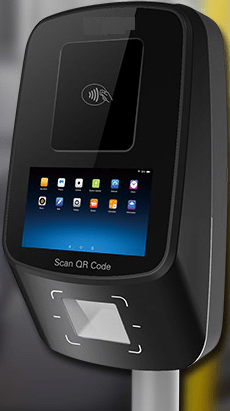
Main Benefits:
The iBonus Distributed Smart Card Payment System offers unmatched resilience and independence compared to traditional fare collection and payment platforms. Unlike conventional light client reader systems that collapse without constant server connectivity, iBonus empowers each terminal to be a complete system — capable of processing transactions, managing cards, and storing records locally. This distributed architecture eliminates single points of failure and ensures uninterrupted service even during outages, wars, sanctions, or geopolitical disruptions.
iBonus is battle‑tested and globally proven: deployed by the U.S. Army and NATO in Iraq and Afghanistan, trusted in Mecca to manage millions of pilgrims, and adopted for Dubai government buses. These deployments demonstrate its ability to perform in conflict zones, mass‑scale religious events, and modern urban transit alike.
By employing low‑cost, high‑security MIFARE smart cards, iBonus delivers affordability without compromising security — making it ideal for cost‑constrained markets such as Africa, as well as operators seeking independence from heavy server infrastructure.
Key advantages:
Resilience: Offline‑first operation ensures continuity under unstable conditions.
Distributed reliability: Each terminal is autonomous, removing reliance on central servers.
Complete card management: Issue, activate, block, and replace cards directly at the client level.
Cost efficiency: Minimal infrastructure, no IT administrators required, rapid deployment.
Scalability: Start small and expand modularly to meet growing demand.
iBonus delivers resilient payments, anywhere — proven where reliability matters most.
Innovations:
The iBonus Distributed Smart Card Payment System is innovative because it overturns the traditional model of fare collection and smart card payments. Conventional systems rely on light client readers that depend on constant server connectivity, creating single points of failure and high infrastructure costs. iBonus is fundamentally different: each terminal is a complete, autonomous system capable of processing transactions, managing cards, and storing records locally. Together, these terminals form a distributed, resilient network that continues operating even during outages, wars, sanctions, or geopolitical disruptions.
This heavy client / light server architecture is rare in the industry and eliminates the need for IT administrators or complex backend infrastructure. The server is optional, used only for value‑added services such as remote top‑up, reporting, and monitoring.
iBonus also innovates by employing low‑cost, high‑security MIFARE smart cards, making advanced payment technology accessible to cost‑constrained markets such as Africa, while maintaining strong security standards.
Its innovation is proven in practice: deployed by the U.S. Army and NATO in Iraq and Afghanistan, trusted in Mecca to manage millions of pilgrims, and adopted for Dubai government buses. These diverse deployments demonstrate that iBonus is not just conceptually innovative, but battle‑tested, scalable, and globally adaptable.
By combining distributed resilience, affordability, and complete card management, iBonus redefines what a smart card payment system can be — a solution built for reliability in the most demanding environments.
iBonus: innovation through resilience.
⚙️ Technical Specifications
System Architecture
- Closed‑loop design: Independent ecosystem using operator‑issued smart cards.
- Distributed client terminals: Each validator is a self‑contained ticketing unit.
- Server‑optional: Backend only enhances features (remote top‑up, reporting, monitoring).
- Offline‑first resilience: Devices continue operating during outages or disruptions.
- Network scalability: Validators form decentralized networks without bottlenecks.
Hardware
- Smart card validators: NFC contactless readers with local fare storage.
- Mobile handheld units: Portable validators for buses, ferries, and minibuses.
- Cloud terminals (optional): For centralized monitoring and reporting when infrastructure allows.
Software & Card Management
- MIFARE smart cards: Standard, low‑cost, high‑security cards — ideal for cost‑constrained transit markets.
- Card lifecycle management: Issue, activate, block, and replace cards directly through client terminals.
- Local transaction logging: Secure storage with later synchronization.
- Operator dashboard: Simple interface for fare and card management.
Operational Features
- No IT administrator required: Plug‑and‑play deployment, automated updates.
- Resilience in unstable environments: Offline operation ensures continuity.
- Scalable deployment: Start small, expand modularly across fleets.
- Low total cost of ownership: Minimal infrastructure and staffing needs.
✅ Strategic Advantages
- Battle‑tested resilience: Proven in war zones (Iraq, Afghanistan).
- Mass‑scale reliability: Successfully managed millions of pilgrims in Mecca.
- Urban transit adoption: Deployed for Dubai government buses.
- Complete card management: Issue, control, and manage transit cards without server dependence.
- Low‑cost, high‑security cards: MIFARE smart cards make the system ideal for Africa and other cost‑constrained transit markets.
- Distributed reliability: Each validator is autonomous, ensuring no single point of failure.
- Rapid deployment: Days instead of years, ideal for urgent transit needs.


 iBonus Limited